
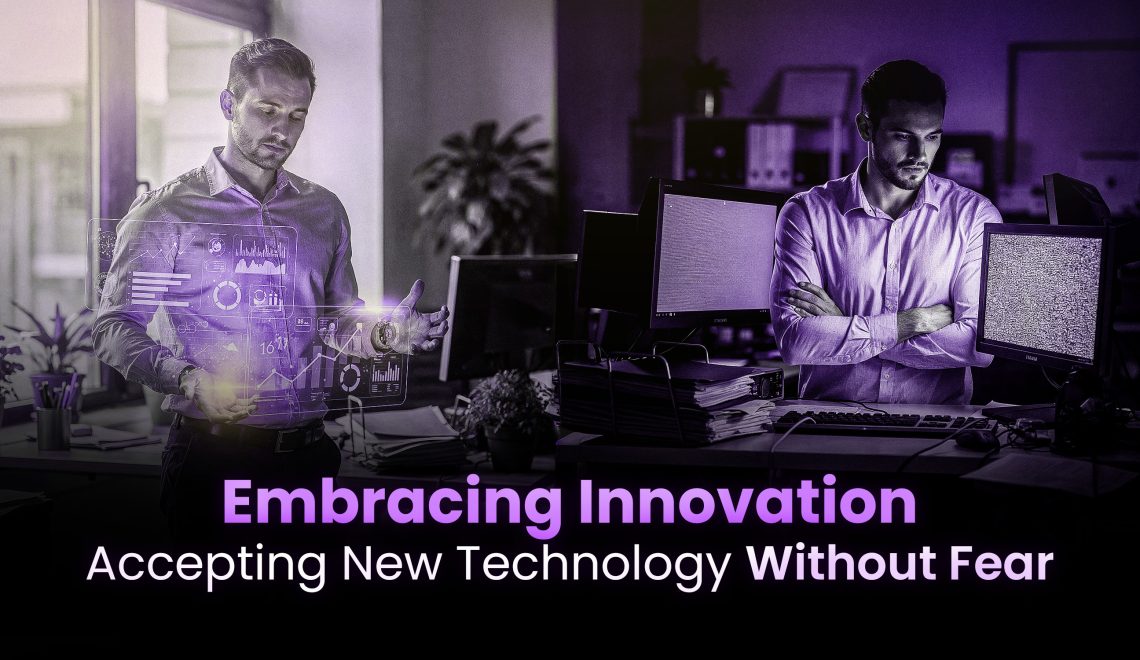
Today, businesses have to constantly adopt new technology to stay competitive. However, when new technology is introduced, the internal reaction from employees is often fear and resistance. We have to shift from this mindset and understand that the real risk to organizational growth lies in sticking to old habits that leave organizations misaligned with the markets.
New technology must be embraced without fear and this must start from leadership. When managers view new technology as an amplifier of human potential, it creates a ripple effect where the team also becomes confident to accept technology and open to change.
Let us explore more on accepting technological innovations without fear so that employees feel safe to step into new ways of working.
The psychology of tech fear
People prefer to follow established processes as they bring predictability and things will continue as they have always been. This often results in failure to adapt to new technology due to which the organization is held back. Competitors who embrace new technology will be able to deliver faster, provide more personalized experiences, and even offer cheaper products.
Resistance to new technology stems from several factors among which the major one is fear. People fear the possibility of job loss due to automation, fear that they may not be able to learn the new system, and even fear losing control or status. So, for a successful transition to a new technology, managers must make efforts to normalize anxiety about change and consider it a natural human response. Managers must interpret the resistance only after due consideration of the emotional angle.
Practical ways to ensure the acceptance of new technology without fear
People will be willing to try new things when they understand not only “what’s in it for the company,” but also “what’s in it for me.” Managers must make efforts to communicate and make employees understand that their value is not tied to today’s technology but in their ability to learn and apply new technologies.
● Leaders must go first – When managers announce a new technology, they must demonstrate its efficiency and their personal acceptance by using the new technology themselves. This will accelerate its adoption. There are several steps managers can take in this regard. Apart from using the new tools in their own daily workflow, managers must also publicly share their learning curve. When they share their initial mistakes, the team begins to understand that it is fine to take a learning period in using the technology. They must also ask for reports and updates on how the new system is being used and understand if any additional training is needed.
● Bring people into the change, don’t push it at them – While introducing new technology, employees should be given a voice in choosing the technology and in implementing it. Run pilots with cross-functional teams and use the feedback for refining the rollout. Managers can also identify key individuals in each team who are more equipped to use the technology and hence capable of supporting their peers. This will make the employees feel that the adoption of technology is something that everyone is building together for meeting shared goals.
● Make training real, relevant, and respectful – Many technology initiatives fail due to lack of proper training which is a cause for frustration, mistakes, and returning to old methods. Managers must ensure that the team members receive hands-on training with realistic scenarios. In addition, sufficient time has to be allowed for practice before expecting productivity so that the need for a learning curve is respected.
● Connect technology to purpose and performance – Employees should be able to understand how the technology will support their work and performance. This can happen when managers repeatedly connect with employees and offer them specific insights on how the new tools can help them work more efficiently and smarter. They can demonstrate this through the progress made in metrics such as cycle time and customer satisfaction.
Final thoughts
Accepting new technology without fear is essential for sustainable growth. Managers must take a proactive approach where they make themselves comfortable and proficient with emerging technologies and also equip the team to use the same. The learning curve has to be accepted so that employees will be ready to embrace the technology without concerns about mistakes.
Training employees and making them efficient in mastering the new technologies can help them use the tools with confidence. The entire responsibility of ensuring smooth implementation and acceptance of the new technology lies with the managers, who should be able to balance empathy for people’s fears with firmness about the need to move forward.
Frequently asked questions
Why do employees resist new technology?
Employees often resist new technology because they are worried about losing their jobs, or due to a lack of confidence in learning new systems. It may also be because of concerns surrounding control or status. When these psychological factors are ignored, adoption of new technology slows, leading to projects underperforming.
How can leaders reduce fear around automation?
Leaders have to clearly explain how automation will change roles, and commit to reskilling and upskilling. They must demonstrate the benefits through real-world examples to gain the confidence of the employees so that they begin to view technology as a tool to enhance their contribution.
What are some practical steps to introduce a new tool successfully?
Practical steps include involving users early, running pilot programs, and offering training that support transition. Leaders should also use the tool themselves so that everyone understands the benefits it can bring to the company and each person.


